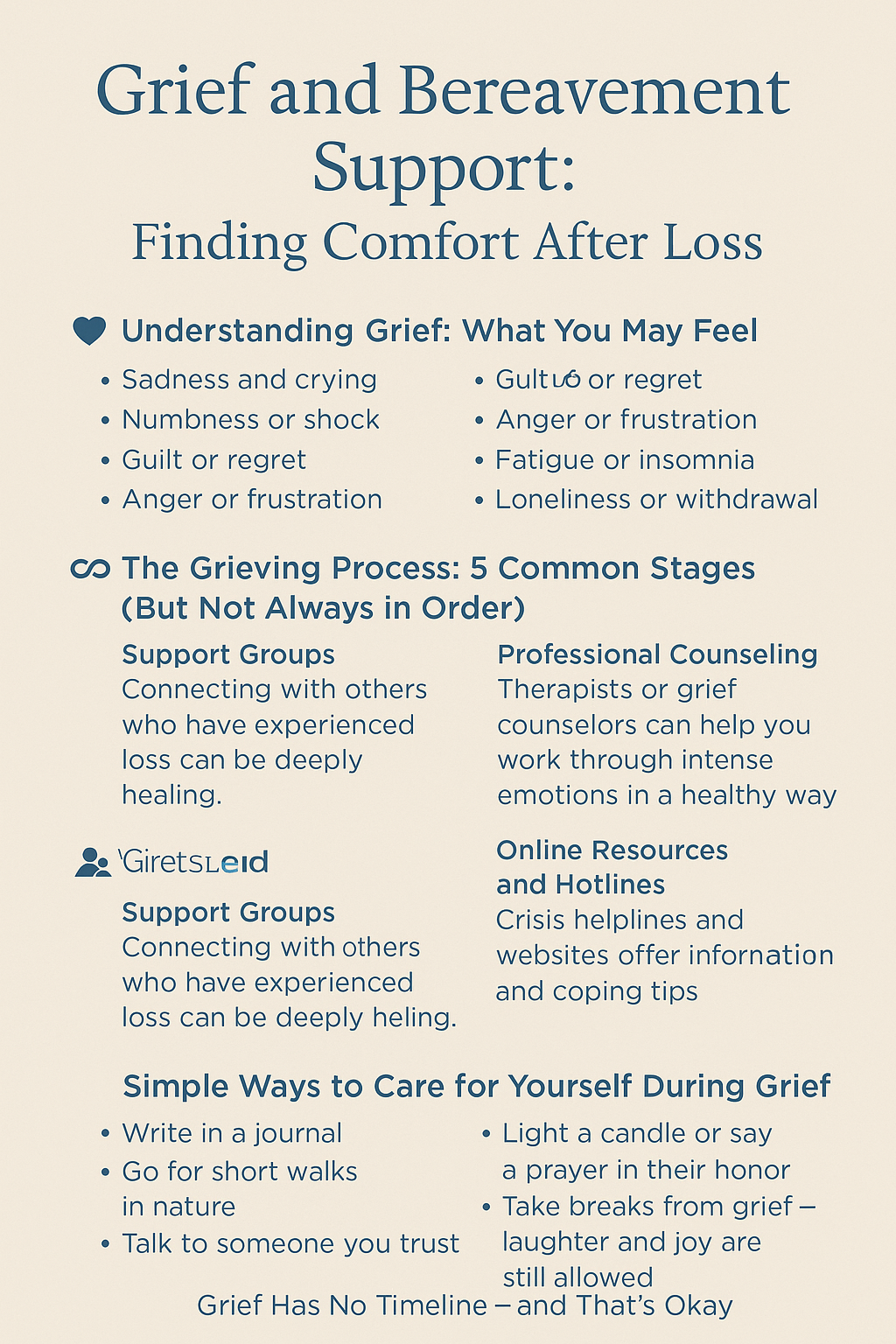
Grief and Bereavement Support: Finding Comfort After Loss
 Cameron Williamson
Grief and Bereavement Support: Finding Comfort After Loss
Losing someone you love is one of the hardest experiences in life. Whether sudden or expected, loss leaves a space words can’t always fill. Grief can feel overwhelming — but you are not alone.
Everyone grieves differently, and there is no “right” way to mourn. What matters is knowing that support is available, and it’s okay to ask for help. In this guide, we’ll explore what grief is, how it affects us, and where to find comfort and healing resources.
🖤 Understanding Grief: What You May Feel
Grief is the natural emotional response to loss. It affects the mind, body, and spirit, sometimes in ways you may not expect.
Common reactions include:
Sadness and crying
Shock or numbness
Guilt or regret
Anger or frustration
Fatigue or insomnia
Loneliness or withdrawal
According to the American Psychological Association, grief often “comes in waves” and can resurface long after the initial loss (apa.org).
🔄 The Grieving Process: 5 Common Stages
Psychiatrist Elisabeth Kübler-Ross introduced the five stages of grief in her 1969 book On Death and Dying. While not everyone experiences them in order—or at all—they provide a framework:
Denial – “This can’t be happening.”
Anger – “Why did this happen?”
Bargaining – “What if I had done something differently?”
Depression – “I miss them so much it hurts.”
Acceptance – “They are gone, but I carry their memory with me.”
Modern grief experts note these stages are not linear but cyclical, and everyone’s journey is unique (Mayo Clinic).
🧠 How Grief Affects the Body and Mind
Grief isn’t just emotional — it can manifest physically:
Trouble sleeping or eating
Headaches, chest pain, or fatigue
Difficulty concentrating
Anxiety or panic attacks
Forgetfulness
The National Institute on Aging explains that grief can affect health by raising stress hormones and lowering immunity, making self-care essential (nia.nih.gov).
🫂 Where to Find Support
You don’t have to face grief alone. Support comes in many forms:
💬 Support Groups
Local grief groups via hospitals, funeral homes, or churches
Online forums & Facebook grief communities
Organizations like GriefShare and The Compassionate Friends
🧑⚕️ Professional Counseling
Licensed therapists or grief counselors can help navigate intense emotions. Many offer telehealth sessions.
📱 Hotlines & Online Resources
988 Suicide & Crisis Lifeline (988lifeline.org)
Crisis Text Line (Text HOME to 741741) (crisistextline.org)
Dougy Center – grief support for children & families (dougy.org)
What’s Your Grief – articles, podcasts, and coping tools (whatsyourgrief.com)
Modern Loss – contemporary grief support and storytelling (modernloss.com)
🕊️ Faith-Based Support
If you are spiritual or religious, your faith community can offer meaningful comfort. Clergy, pastors, rabbis, imams, or other spiritual leaders provide rituals, prayers, and support grounded in shared belief. According to the Hospice Foundation of America, “faith and spirituality often help people make sense of loss and find hope for healing” (Hospice Foundation of America).
💡 Simple Ways to Care for Yourself During Grief
Keep a journal
Take short walks in nature
Talk to a trusted friend
Create a memory box or tribute
Light a candle in their honor
Allow joy and laughter when it comes
💞 Grief Has No Timeline — and That’s Okay
Grief doesn’t have an expiration date. Over time, pain may give way to remembrance and gratitude. The love remains, even if the loss reshapes your life.
As grief expert David Kessler notes: “Grief is a reflection of love that has no place to go.”
You’re Not Alone — We’re Here to Help
At RemembrLink, we’re committed to supporting families not just during memorial planning but in the days, weeks, and months that follow. Whether you’re creating a tribute, exploring our grief resources, or simply needing a place to reflect, we’re honored to walk this journey with you.
Search
Latest Blogs